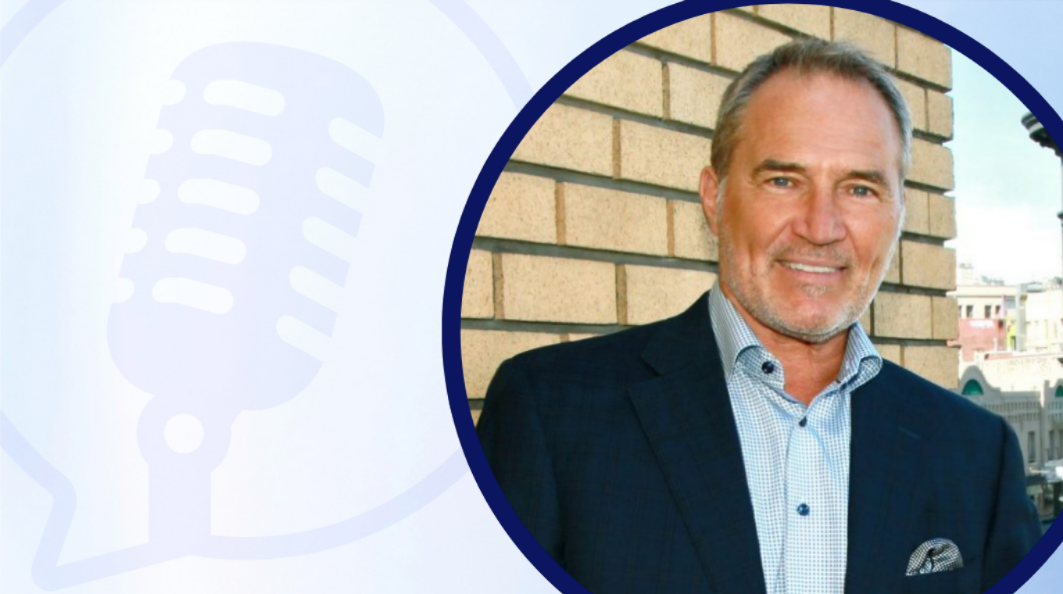
In Conversation with Christos Richards | Head of Healthcare & Life Sciences · Calibre One · Based in Los Angeles
Candid with Calibre One is a series of conversations with our partners – honest, unfiltered perspectives on leadership, hiring, and what’s really happening in the world. No set agenda, just questions worth asking. For our first feature, we sat down with Christos Richards, who heads our Healthcare and Life Sciences practice out of Los Angeles.
Where it all began – what drew you to executive search, and what keeps you in it?
Christos Richards: “Unlike most people in this business, I’m a second-generation recruiter. My stepfather was a recruiting executive, and when I came back to the US from living in Switzerland, he offered me the opportunity to join his firm. I loved it from the first day.
I came from hospitality management – a world where you’re dealing with people constantly. And people, ultimately, are our business in executive search. What’s kept me in it is everything: it’s rewarding, it’s fascinating, and no two days are the same. Every client is different, every candidate is different, every search is different. Even the same role at two different companies will play out in completely different ways.
What’s particularly meaningful now is the nature of the work itself. I started in the 80s in aerospace and defense – I’m proud of that work, and I believe strongly in a sound defense policy. But I had to acknowledge that many of the products my clients made were designed to end lives. The leaders we place in healthcare and biopharma are working to save them instead. That adds a dimension of satisfaction that’s hard to put into words.
I fell into this career by accident. I don’t think anyone grows up wanting to be an executive recruiter, I think you grow up wanting to be a baseball player or a cowboy. But I kind of fell into it, and I loved it from the first day. And I wouldn’t do anything else.”
What are you seeing in the market right now that leaders aren’t talking about enough?
That sense of purpose extends well beyond the transaction – it shapes how he sees the work, the people, and the industry.
Christos Richards: “Culture. I think we’ve collectively underestimated what the last six years have done to the workforce.
COVID forced a dramatic shift in where and how people work. And while remote work has real benefits, I don’t think we’re having an honest enough conversation about what it’s cost us. One of the hardest parts of recruiting someone is asking them to leave a team they feel loyal to. But it’s nearly impossible to build that loyalty – to a team, to a manager, to an organization – if you’ve never actually met them. There are thousands of employees today who have never seen a single coworker in person. Some were hired without meeting anyone face to face.
That’s partly why we’ve seen such high job mobility over the last five or six years. In executive leadership recruiting, one of the things we look for is stability – someone who’s been in a role long enough to live with their mistakes, not just ride a quick win. That kind of tenure is harder to find now.
We went from a culture where people knew their coworkers’ spouses, their children’s names, whether someone was getting married or having a baby – to one where everyone is effectively a stranger. If we expect people to feel loyal to a company or a team they’ve never met, we’re asking for something we haven’t given them a reason to feel.
There are other forces at play, of course – the financing climate, the IPO market, geopolitics, capital availability. But culture is the one that calls for the most urgent corrective action. One of the things that distinguishes us as a firm is that we really dig into understanding what a client’s culture actually is, so we’re not just placing someone, we’re placing someone who will succeed there. That work matters more than ever right now.”
What skill is becoming dramatically more important for leaders?
The culture argument raises a natural follow-on: what skills do leaders actually need to navigate this environment?
Christos Richards: “I’ll try to avoid going too far down the AI rabbit hole, because everyone’s already in it. But the leaders who choose to ignore what’s happening with technology – AI, machine learning, data science, analytics – are going to get left behind.
Our firm is a useful example. We started as a technology recruiting company. Today we have multiple practices – life sciences, healthcare, consumer, entertainment, financial services, software. But technology runs through all of it. The leaders who will continue to perform at a high level for the next decade or two are the ones who understand how technology will shape their industry, not the ones who assume it won’t reach them.
That said, and this matters, technology is only as good as the people using it. It won’t replace the human capacity to think differently, to build something from nothing, to connect with another person and earn their trust. You can ask AI for twenty ideas. You still need humans to build them. The skill isn’t about becoming a technologist. It’s about not being afraid of the tool, knowing how to use it strategically, and never losing sight of what’s irreplaceable about your own judgment.”
What is the biggest opportunity in your sector that almost no one is talking about?
Christos Richards: “I’m only smiling because if I tell you, then everybody else is going to jump on it, versus me keeping it a secret. Let’s come back to that one – I’m not sure I want to disclose that just yet” he said with a laugh.
The question was noted – and graciously sidestepped. Some cards, it turns out, stay face-down.
If you weren’t in executive search, what would you be doing?
Christos Richards: “I would either be living in the south of France, writing novels – or living in the wine country, making wine. Honestly, both sound equally compelling.”
What habit or ritual keeps you sharp?
Two answers. Both involving considerably less email.
Christos Richards: “I would say it’s exercise, in two forms. When I’m in Mexico, I surf six out of seven days a week. In California, I do yoga six, sometimes seven, mornings a week. I try to do something physical every day, because being physically fit genuinely allows you to perform better mentally.
Then there’s chess. I play one or two games a day on the computer – not rapid fire, but longer games that take ten to twenty minutes each. I do it over coffee in the morning when I don’t have an early call. It drives my wife a little crazy when I get too absorbed in it. But there’s real research behind the habit: mental exercise is one of the best defenses against cognitive decline. It’s my way of keeping my thinking sharp.”
Physical discipline. Mental discipline. Both deliberate, both daily.
What’s the best piece of professional advice you’ve ever received – and who gave it to you?
Christos Richards: “It was my stepfather who taught me the business, and he gave it to me on my very first day.
I had put together a script. I was recruiting for a head of engineering role, and I’d written out exactly what I was going to say. He watched me make the pitch on the telephone. Afterward, he picked up the piece of paper and threw it in the trash. He said: ‘Don’t ever do that again.’
I asked him why. He told me that we’re not selling something – we’re representing something. And the moment you read from a script, you sound like you’re selling. The moment that happens, you lose their attention, and you lose their trust.
His advice was to tell the story differently every time, even if it’s the same search and even if you’re making twenty calls in a row. Really understand what you’re representing. Really understand why it should be compelling. And then find a way into the conversation that feels like just that – a conversation, not a pitch. For our industry, I think it’s probably the most important thing I was ever taught.”
This conversation has been edited for length and clarity.